Service + maintenance guide
How To Reset Automatic Soap Dispenser
Architectural Design Automatic Soap Dispenser
Resetting a touchless dispenser is usually a simple process: verify power, clear soap buildup, re-prime the pump,
then run a reset cycle (if your model supports it). Regular cleaning prevents clogs, reduces misfires,
and maintains consistent sensor activation in high-traffic restrooms.
Step 1: Power Down + Inspect
Turn off the unit and disconnect from power. Inspect the reservoir, pickup tube, and nozzle for dried soap
residue or debris. If the nozzle is clogged, flush with warm water until clear.
Step 2: Battery Reset
For battery-powered models: remove batteries, wait 60 seconds, then reinstall. Confirm correct polarity and
replace weak batteries to restore stable sensor performance.
Step 3: Run Reset (If Available)
If a reset button exists, press and hold until the indicator light blinks (or as your model indicates).
Reassemble the unit, then test activation by placing your hand under the sensor.
Step 4: Prime + Test
After refilling, prime the pump if needed (some dispensers require a few cycles to pull soap through the line).
If dispensing remains inconsistent, verify soap viscosity and confirm no air gaps in the pickup tube.
What to do if the auto soap dispenser is not working
- ✓Check power: AC adapter seated / batteries installed correctly.
- ✓Confirm soap type: thick soaps can clog lines and nozzles—use the correct formulation.
- ✓Clean sensor window: wipe with a damp cloth to remove residue, stains, or condensation.
- ✓Clear the nozzle: flush with warm water (or mild vinegar solution) to remove dried soap.
- ✓Reset + retest: run the reset procedure and test again under normal lighting conditions.
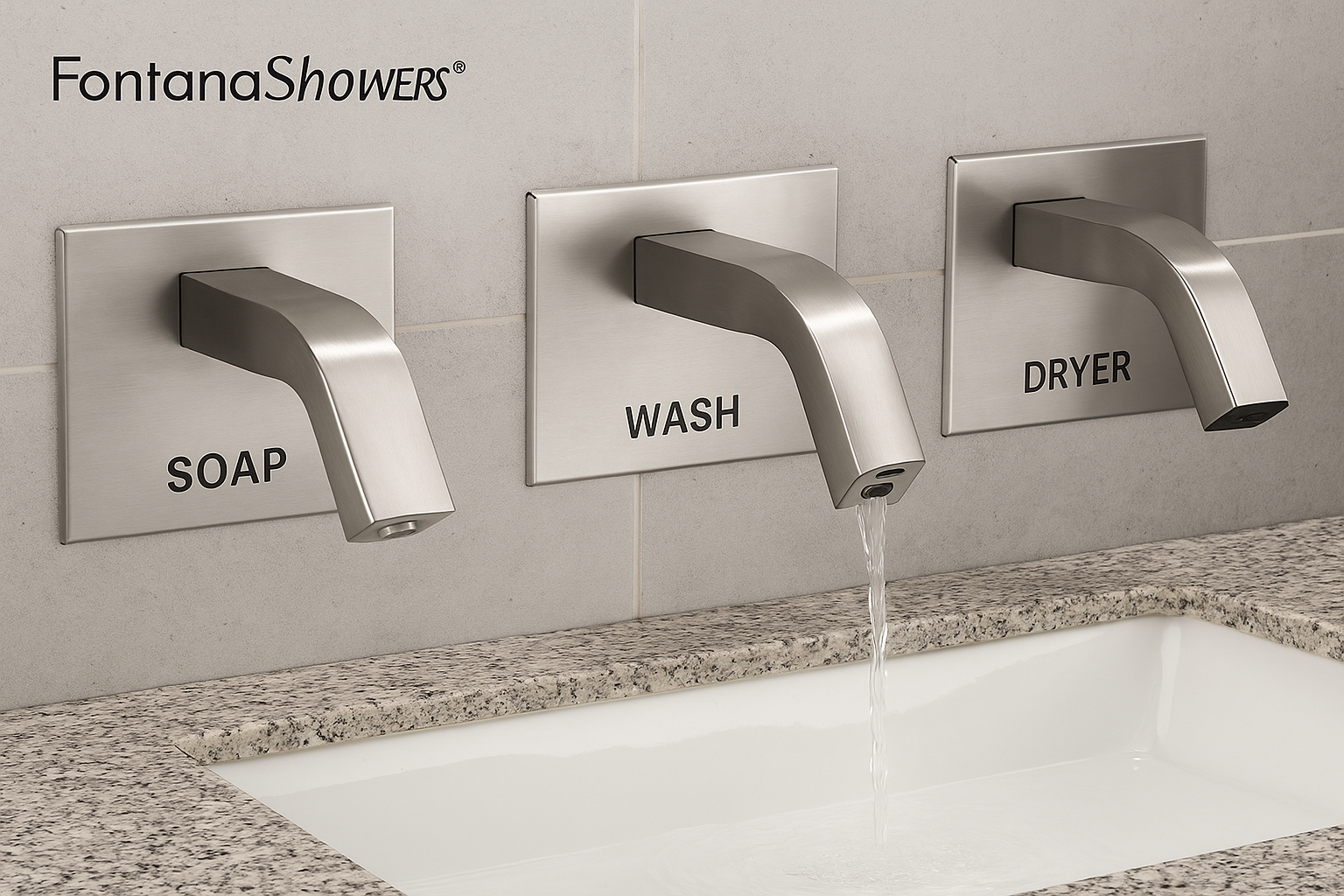
Parts overview: reservoir, pickup tube, nozzle, sensor window, and control module.
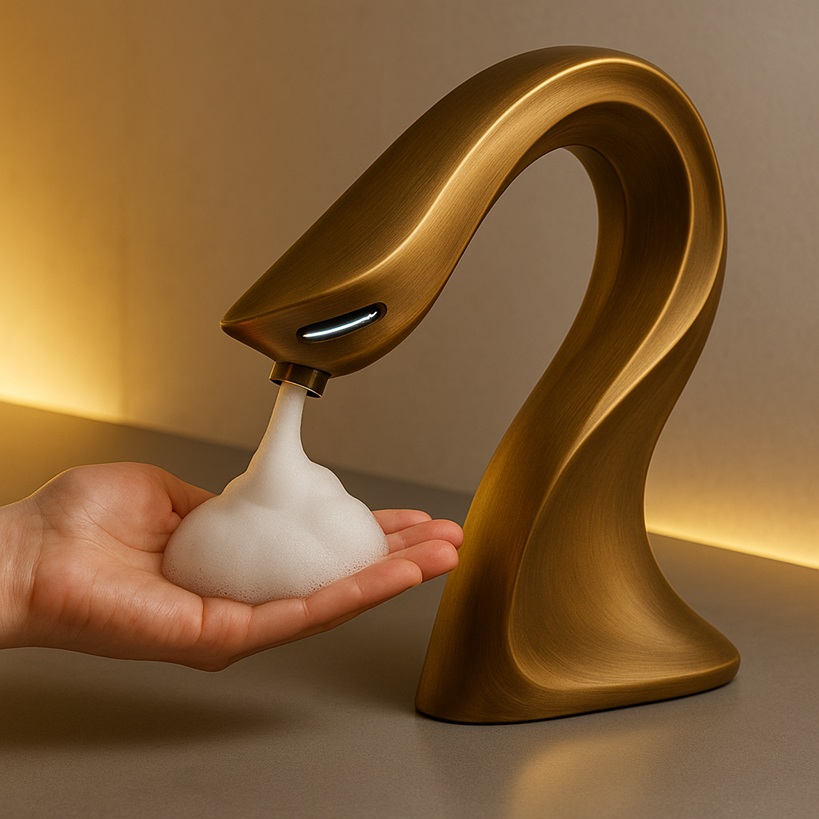
Touchless dispenser options: deck-mount and wall-mount configurations.

Commercial selections: engineered for high-traffic washrooms and easy maintenance.
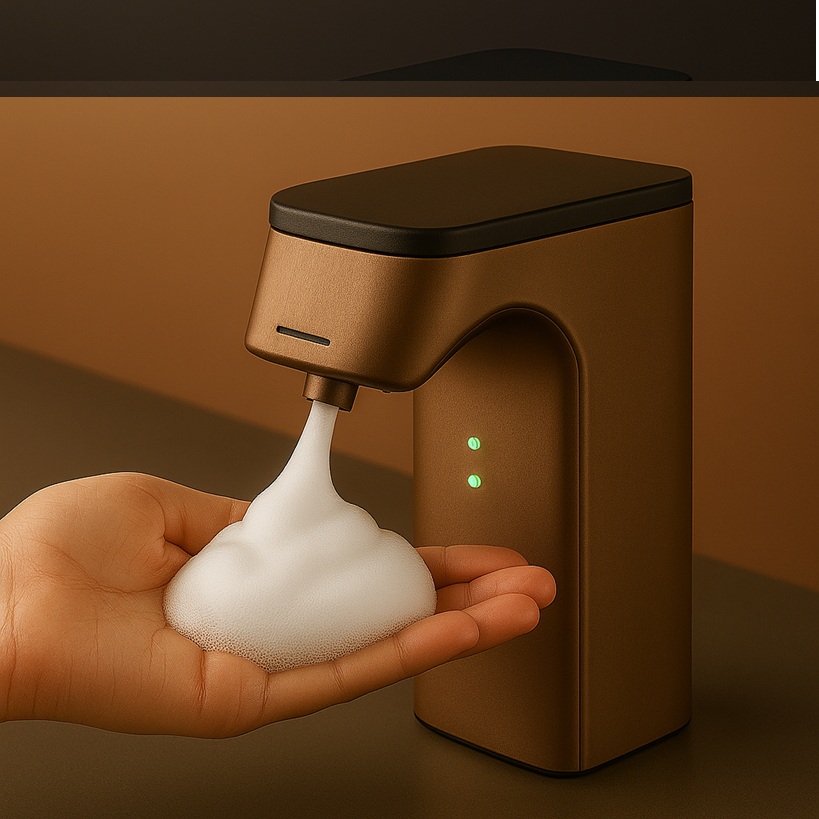
Office building applications: clean aesthetics, consistent activation, controlled dosing.
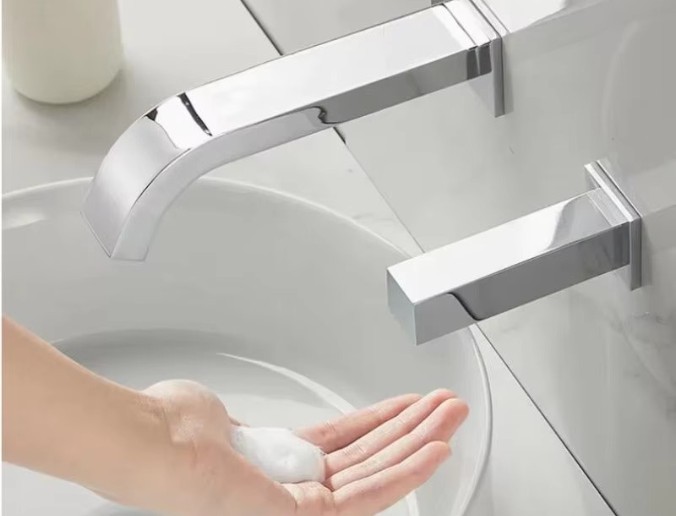
Collection overview: finishes and formats to match commercial restroom themes.
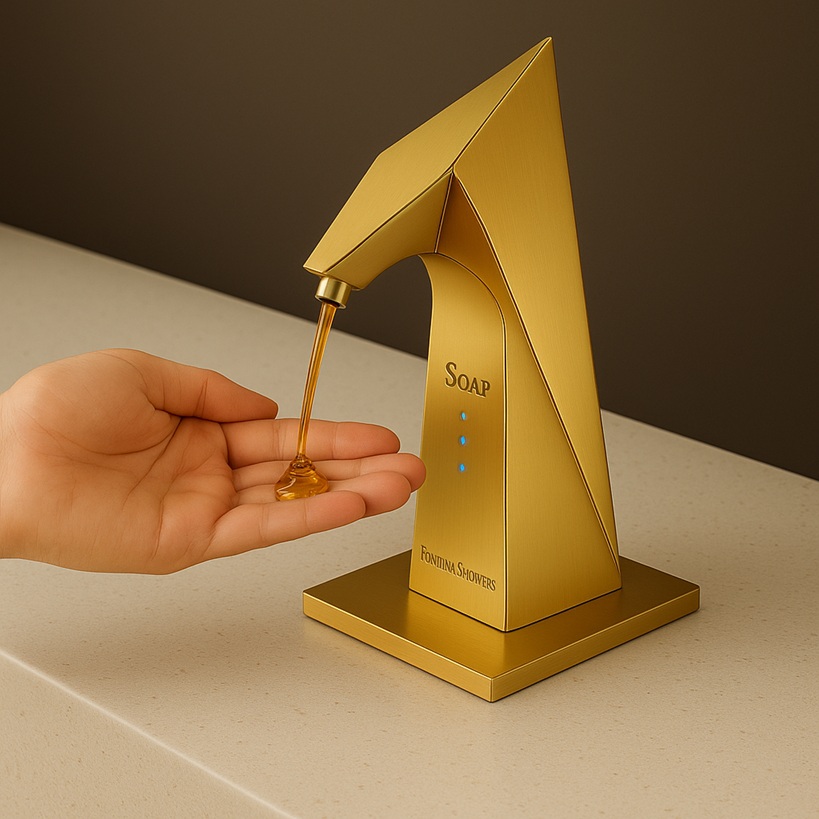
Modern washrooms: pair with matching touchless faucets for a cohesive spec.
Explore Soap Dispensers Series
Read More
Commercial Notes for High-Traffic Washrooms
Automatic soap dispensers help reduce cross-contamination by removing the need to touch a pump head, while
controlled dosing limits waste. In demanding facilities, look for serviceable components, secure mounting,
and a sealed electronics package designed for long-life operation. Pairing a touchless dispenser with a
matching touchless faucet creates a consistent user experience and supports modern hygiene protocols across
high-traffic public washrooms.
Why Sensor Quality Matters
A reliable touchless system depends on consistent detection under real-world lighting and reflective countertop
conditions. Better engineered systems reduce misfires and missed activations, keeping interactions fully
contactless—especially important in hospitals, restaurants, and public restrooms where reducing transmission
of bacteria is a core requirement.
|
|
Reset Guidance · Sensor Checks · Pump Priming
Automatic Soap Dispenser Reset and Service Planning
Review power cycling, battery inspection, sensor cleaning, nozzle checks, soap-line priming, pump evaluation, and model-specific service documentation before replacing components.
Power Reset · Sensor Cleaning · Nozzle Check · System Priming
Fontana Automatic Dispenser Support
Service Your Soap Dispenser
Explore dispenser collections, exact models, coordinated wash systems and maintenance-planning resources.
Dispenser Collections
Featured Products
System Options
Service Resources
|
|
|