From Airports to Office Buildings Electronic Faucets
|
The first thing one must consider when upgrading a commercial washroom is to introduce the electronic, touchless faucet. If it hasn’t already been done, replace the manual technology with
automatic bathroom technology. Whether it is a public washroom in an airport or an office building, an electronic faucet is ideal for use. This relatively new technology is known for its user-friendliness, hygiene-friendliness and its contribution to water-conservation. These faucets eliminate the need to touch the tap or turn valves to make water flow by using presence sensors. These sensors automatically turn the faucet on when hands are detected under the nozzle.
Types of electronic faucets
All electronic faucets are similar in terms of their mechanics and most differ only in terms of the material that they are made of. Let’s look at some of the common electronic faucets.
- Plastic faucets
Plastic faucets are the most popularly used faucets. This is so because of their cost-effectiveness, but they are considered unsuitable for commercial use as they are more likely than others to get damaged. If used publicly, these faucets might need frequent repair.
- Stainless steel faucets
Stainless steel faucets are perfect for
commercial use because of their shiny outward appearance and durability. The surface is likely to remain shiny as long as it is not scratched. Stainless steel does not corrode or rust easily.
- Brass and chrome coated faucets
These faucets are made of zinc coated with brass. The brass coating reduces risk of corrosion or rusting of the zinc. The brass also makes the appearance shinier by doing so. The only problem with this type of faucet is that once the brass has worn out, the brass is at risk of corrosion and this can cause hygiene issues.
- Solid brass faucets
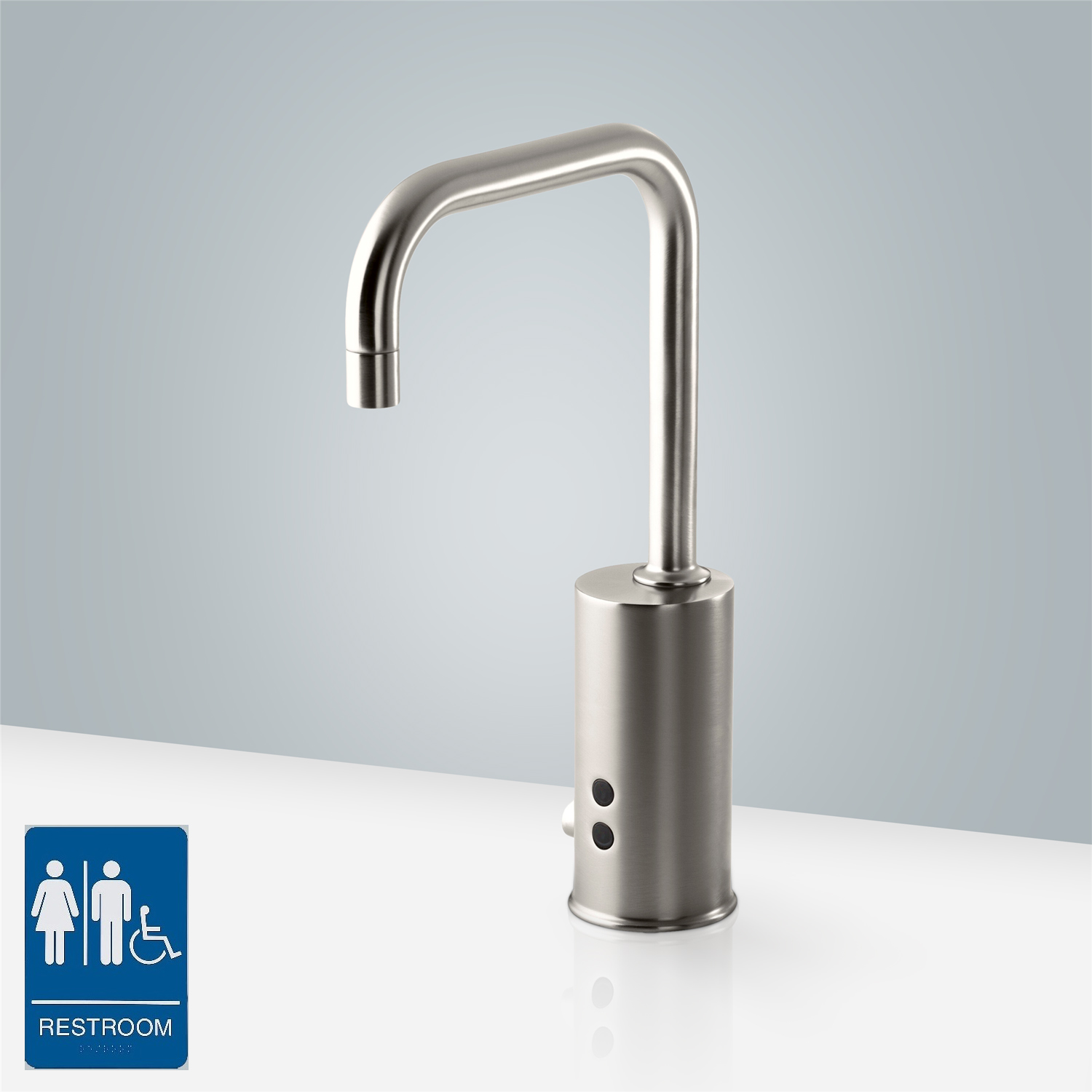
Solid brass faucets are purely made of brass. Brass is known for being resistant to rusting. These faucets are thus particularly useful in public places and where water is considered ‘hard’. ‘Hard’ water runs a greater chance of corroding and rusting its channels. These faucets therefore
reduce maintenance costs and frequency of need for repair.
|
|
|
|
Features
- Sensor
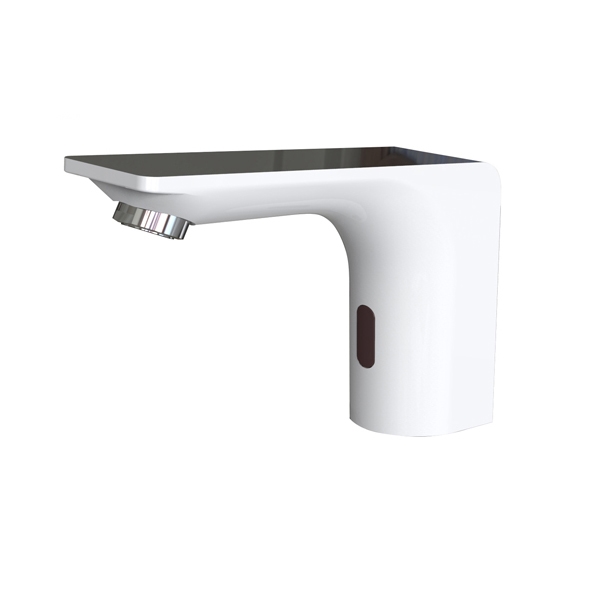
The only distinguishing feature of automatic faucets is the sensor. The sensor is located at the base of the spout of the faucet. This presence sensor detects presence of hands and once hands are detected, it activates the pump to allow the flow of water. The water flows only as long as the sensor detects the hands and when they are no longer detected, the flow stops.
- Power source
The electronics, sensor and the valve need a power source to run them. The power source can be either a dry-cell battery or a low voltage current from an AC transformer.
- Solenoid valve
The valve is a
solenoid-activated valve that has a rubber disk meant to control the water flow. When the sensor detects presence of hands, the valve opens to allow the water to flow. The valve remains open only as long as the hands remain under the sensor.
- Spout
The spout is the visible part of the faucet.
|
|
|
|
Benefits of electronic faucets
- The automatic faucets are hygiene-friendly
Contamination risk, particularly in commercial areas, is increased because of the need to make contact with the device. By eliminating the need to touch the faucet, the automatic faucet eliminates the risk of contamination through contact.
- It reduces water-wastage
The electronic faucets automatically stop the flow of water when hands are removed from under the spout. Water-wastage is particularly problematic in public places and this makes these faucets ideal for commercial use.
Where they can be installed
The automatic faucets are ideal for commercial use because of their user-friendliness, hygiene-friendliness and water-conservation. These can be installed in airports, office buildings, restaurants, gyms, hotels, plazas etc.
Durability and ease of use
The touchless faucets, as the name suggests, do not need to be touched, this alone makes them more durable because risk of damage is reduced. Repeated use of the tap in case of traditional faucets makes damage more likely and thereby results in greater maintenance costs. At the same time, this also makes use much easier.
|
|
|
|
|
|
Examine
Automatic Soap Dispensers & Touchless Bathroom Faucets-... Read More
Public & Commercial Restroom Faucet Applications
Design & Sustainability Resources
Office Building & Corporate Workplace Applications
Office Resource Hub
Central office-building resource covering commercial
touchless faucets, restroom use, workplace traffic,
fixture selection and coordinated office washroom planning.
FontanaShowers
Workplace Touchless Systems
Office-focused faucet guidance addressing sensor-operated
fixtures for shared workplace restrooms and frequently
used commercial lavatory environments.
FontanaShowers
Corporate Technology
Examines how hands-free restroom technology can support
workplace hygiene while maintaining the architectural
character expected in contemporary corporate interiors.
FontanaShowers
Facility Operations
Facility-oriented guidance covering durability,
vandal resistance, maintenance access and strategies
for keeping corporate restrooms operational.
FontanaShowers
Class A Workplace
Explores touchless restroom fixture strategies for
premium office developments where appearance, hygiene,
durability and facility standardization intersect.
FontanaShowers
Specification Packages
Specification-focused resource for coordinated touchless
fixture packages serving Class A offices, technology
campuses and other professional facilities.
FontanaShowers
Workplace Engineering, AEC Coordination & Fixture Evaluation
Office Faucet Planning
Office-focused reference examining automatic sensor
faucets for workplace restrooms and commercial
handwashing environments.
Auto Touchless Faucets
Fixture Comparison
Comparative resource examining commercial touchless
faucet options from Fontana, Sloan and Kohler in the
context of office restroom applications.
Commercial Touchless Faucets
Architectural Fixtures
Architectural reference for evaluating touchless
and automatic faucet systems used in commercial
and professional restroom environments.
ArchitecturalFaucets
AEC Case Studies
Case-study pathway for architects and specifiers
reviewing sensor performance, installation,
commissioning and commercial fixture applications.
ArchitecturalFaucets
Architect Resources
Technical pathway supporting architectural review,
fixture specification, installation coordination
and project documentation.
FontanaShowers
BIM / Revit
Digital project resources supporting architects,
engineers and contractors coordinating commercial
restroom fixtures within BIM workflows.
FontanaShowers
Corporate workplace specification context:
Coordinate faucet-to-basin geometry, sensor detection,
flow requirements, power strategy, finish schedules,
soap dispensing, shutoff access, serviceable components,
tenant traffic patterns and maintenance zoning with the
office building's architectural, plumbing and facility-management plan.
Supporting Specification & Workplace Planning Resources
Additional verified pathways supporting commercial office
fixture specification, BIM coordination, sensor technology,
documentation and long-term restroom operation.
Accessibility & Water-Efficiency References
|
|
|